Property Care Journal / Article 05
Property Care Journal · Guide 05 of 40
How Often Should an Office Be Cleaned?
Factors that help businesses choose a janitorial schedule for their workplace.
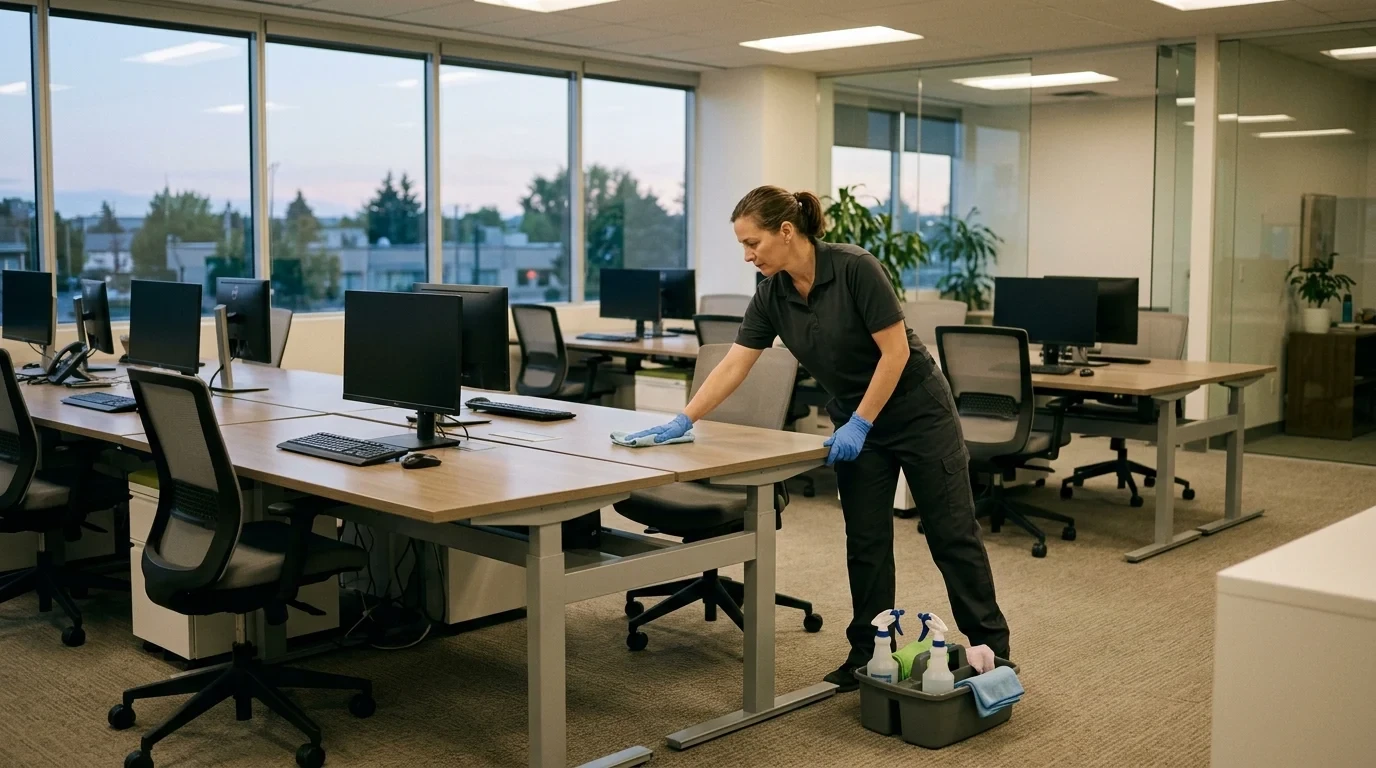

Factors that help businesses choose a janitorial schedule for their workplace.
There is no single cleaning frequency that fits every office. Staff count, visitor traffic, shared facilities, operating hours, and the kinds of work done in the space all affect the schedule.
Washrooms, kitchens, entrances, and shared meeting rooms often need more attention than lightly used offices. Consider how quickly bins fill, floors show soil, and touchpoints are used.
A recurring visit can cover agreed daily-use areas, while periodic work may include deeper floor care or detailed cleaning. Write down what is included and how often each task occurs.
A new team size, layout, or operating schedule can change cleaning needs. Revisit the plan when usage shifts and invite staff to report recurring trouble spots.
Before arranging the work, gather the details that will make the request clear:
Winter conditions can change quickly, and each site has different access priorities. A written plan helps everyone understand which areas are in scope and how to report changing conditions. Keep expectations realistic and check the site as conditions evolve.
Use the recommendations in this guide as a starting point, then adapt them to the building, its occupants, the agreement in place, and local requirements. Keep a short record of decisions and revisit it when conditions change.
Write down the date, area reviewed, work requested, and person responsible for follow-up. Add photos when they clarify a condition, and keep the original image with its date rather than relying on memory. A short record is useful when a task spans more than one visit or when several people share property responsibilities.
After the work, note what was completed and which items remain open. Revisit the plan when the property changes use, occupants, or season. This simple habit helps owners make informed decisions about future upkeep without assuming that every property needs the same schedule.
Start with the property condition and the main priority described in this guide: There is no single cleaning frequency that fits every office. Staff count, visitor traffic, shared facilities, operating hours, and the kinds of work done in the space all affect the schedule. Note what is known, what needs checking, and who can make decisions.
Timing depends on the property, service, location, and current schedule. Share your preferred dates early, especially when work is tied to a move-in, seasonal change, or business hours, and confirm availability before making dependent plans.
It often helps to discuss related tasks in one request. Confirm the order, responsibilities, and scope for each task; some work may require a separate qualified provider or a different appointment.